

Dolby Atmos 5.1 vs Stereo Mixing: Why Immersive Sound Is Changing Music Forever
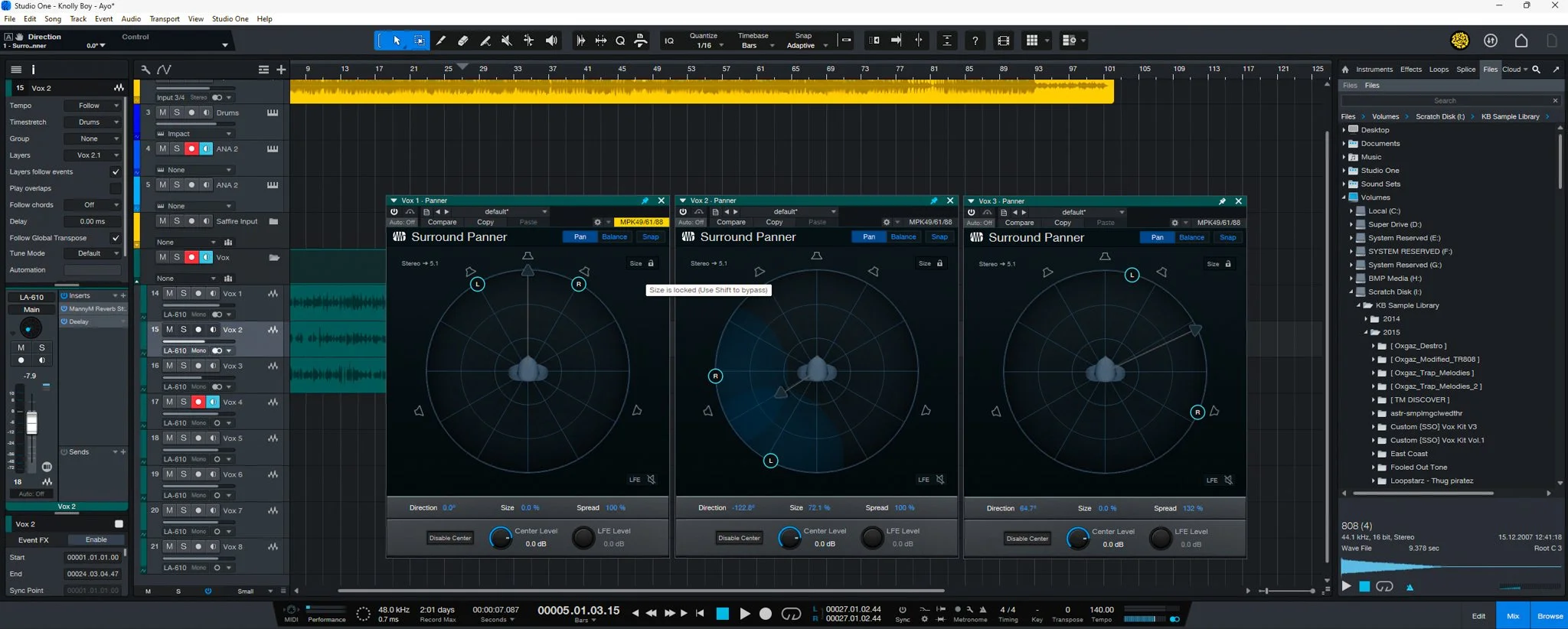
alt: A digital audio workstation showing a 360 Reality Audio panner interface, representing how instruments can be placed in a 3D sound field
In the late 1990s, Dr. Dre (Wikipedia) was an undisputed hip-hop legend, but even legends face the risk of sounding dated. Fast forward to today: imagine Dre in his studio, realizing that the same old stereo beats won’t cut it for a generation raised on cinematic sound. In a plot twist worthy of a comeback film, he remixes a classic album in Dolby Atmos. The result? Fans new and old are looking over their shoulders for sounds that seem to come from everywhere – and Dre’s legacy gets a tech-driven refresh. It’s as if the Chronic went from 2D to 3D, injecting new life into a career some thought had peaked (Wikipedia). The sarcastic lesson: even the greats have to adapt or fade out, and nothing says adaptation like reinventing your sound in 360 degrees.
Flop or Future: When Tech Makes History
Cast back to the 1970s when surround-sound first tried to elbow stereo aside – it pretty much flopped. Quadrophonic vinyl and other fancy formats ended up in the bargain bin of music history. Fast-forward to 2021: Apple Music (Wikipedia) flips the switch on Spatial Audio streaming for the masses. Critics rolled their eyes, calling it a gimmick and “just another surround fad.” But then a funny thing happened – listeners actually loved it. Within a year, thousands of tracks were reborn in spatial mixes and streaming services started dangling incentives for immersive tracks (Billboard). What once was a techie novelty became an industry turning point. The lesson here? Sometimes a failed idea is just waiting for the right time (and the right tech giant endorsement) to become the next big thing. Spatial audio went from near-forgotten experiment to the future of music overnight, proving that timing is everything in innovation.
What This Blog Will Teach You
This blog dives into how 360° spatial audio is shaking up hip-hop. You’ll learn what spatial audio actually is and how it compares to traditional stereo in mixing & mastering. We’ll explore why artists and producers – especially in hip-hop – are excited about immersive music production techniques. Expect real insights (with a sarcastic twist) on the benefits and trade-offs of Dolby Atmos in a professional recording studio. If you’re a music artist, producer, or label, this blog shows why stepping up your song mixing game with new tech matters. By the end, you’ll understand how 360° sound can impact everything from creative expression to getting your tracks placed in movies (sync licensing), and why it all matters to creators worldwide. In short, if you care about making your music competitive and immersive, keep reading – this is for you.
Beyond Stereo: Spatial Audio 101
ALT Text: A digital audio workstation showing a 360 Reality Audio panner interface, representing how instruments can be placed in a 3D sound field. Stereo sound is so last century – literally, it’s been the standard for over 100 years. Traditional stereo mixes audio across two channels (left/right), which one audio engineer likened to “looking through a window” at the music (National Academies). Spatial audio, on the other hand, drops you inside the music. It uses multiple speakers or advanced algorithms to place sounds all around a listener, not just from two sides. In formats like Dolby Atmos, audio is treated as “objects” that can move in a 3D space, including above and below you. If stereo is a flat painting, spatial audio is a sculpture you can walk around – the difference is huge.
To appreciate it, think of a simple beat: kick drum, snare, hi-hat, vocal. In stereo, those elements spread between left and right. In Dolby Atmos or 5.1 surround, that hi-hat could literally circle your head, the vocal feels like it’s right in front of you, and the bass can thump from behind or beneath. Premier audio brands like Denon have built home systems capable of 5.1 and 7.1 playback for years, so the tech to experience this isn’t sci-fi – it’s already in living rooms. The innovation is that now music producers are actually mixing songs with these systems in mind, not just movie sound effects. A few years ago, you needed a tricked-out theater or expensive setup to hear such detail. Today, even a pair of good headphones can simulate “above and around” effects thanks to clever engineering (Dolby). The result is a more immersive listening experience that many describe as “literally being in the room” with the artist (Dolby).
Of course, immersive audio isn’t brand new – the concept has been around. Surround sound had its false starts (pour one out for quadraphonic 8-tracks). What’s changed is accessibility and demand. Streaming giants and device makers are fully on board now, and consumers are curious. In 2023, the demand for Dolby Atmos-enabled devices jumped over 30% (MIDiA Research), and the adoption of Atmos on smartphones spiked nearly 45% as more people tried out spatial audio on their phones (IFPI). In plain English: people are actually using this stuff. The tech finally caught up to the promise, and unlike past attempts, it doesn’t require the average listener to buy a dozen speakers and rearrange their house. You can get a taste of 360° sound with just a normal pair of earbuds and a streaming app. Convenience + wow factor = here to stay (you heard it here first).
Why Hip-Hop Is Embracing 360° Sound
Hip-hop has always been about innovation and pushing boundaries, from sampling to synthesizers. Now, some of the biggest names in rap are exploring spatial audio as the next creative frontier. When Kendrick Lamar, Future, and Travis Scott show up on Apple’s curated “Hip-Hop in Spatial Audio” playlists, you know a trend is catching fire (Apple Music). Even legendary tracks are getting new life: classic anthems like Notorious B.I.G.’s “Juicy” and Snoop Dogg’s “Gin and Juice” have been remixed in Dolby Atmos and re-released to a curious new generation (Major Media). The initial reaction? Mind blown, for the most part. Fans report hearing nuances in beats and ad-libs that were buried in old stereo mixes. A well-known producer, Finneas, said that mixing in Atmos lets him put an artist’s talent “front and center” in an immersive way that stereo couldn’t match (Dolby). That means those intricate hi-hat patterns and deep 808 kicks in trap music can each occupy their own space in the mix, rather than fighting for attention in a flat left-right pan.
For hip-hop, which often has dense production and heavy bass, spatial audio can be a game changer. Imagine a sick trap beat where the snares snap from the sides, the sub-bass swells from below, and a haunting sample literally hovers above you. It’s not just gimmicky panning – it can make the music hit differently. An immersive mix has the potential to highlight lyrics and instruments more clearly, since there’s room to spread out all the elements of the track (Industry Expert). One audio expert noted that when he heard LL Cool J’s “Mama Said Knock You Out” in Atmos, it was like being “propelled forward” through the song, with parts moving around him in a thrilling way (Production Expert). That’s a 1990 boom-bap track suddenly feeling like a virtual reality experience.
However, in true hip-hop fashion, there’s debate. Some old-school listeners claim that certain Atmos remixes of their favorite rap songs feel weird or hollow compared to the punchy stereo they grew up with – a few forum warriors didn’t hesitate to call it a “missed mix” (Reddit placeholder). The truth likely lies in how the spatial mix is done. A great mix in 360° should enhance the vibe, not distract from it. This requires skill – just dumping stems into an Atmos renderer won’t automatically sound amazing. Top engineers are learning new techniques to make sure the vocals stay front and center and the bass still bangs, even as they utilize the surround space. In other words, the fundamentals of song mastering still apply. If the original mix was weak, an immersive version won’t magically fix it (sorry!). But when used right, spatial audio can elevate a track’s energy and emotional impact. Hip-hop’s core is storytelling and feeling, and anything that makes the listener feel inside the story of the song is a powerful tool.
The Business of Beats: Tech, Royalties & Sync Opportunities
Beyond the cool factor, there are some very real business reasons everyone is buzzing about spatial audio. For one, streaming services are incentivizing it. Apple Music publicly stated that songs available in spatial audio will earn higher royalty rates – reportedly up to 10% more than standard tracks (Billboard). That’s a not-so-subtle nudge to artists and labels: if you invest time in an Atmos mix, you might get a bigger paycheck. Money talks, and a 10% bump per stream is enough to get indie labels and major labels alike to pay attention. In 2025, we’re seeing more albums – especially in genres like pop, R&B, and hip-hop – drop with a spatial mix either at launch or shortly after, as labels race to capitalize on the trend (Market Data).
Another angle is sync licensing – you know, getting your song placed in a movie, TV show, game, or ad. In the sync world, having a spatial audio mix could give you an edge. Why? Because many of those mediums (film, TV, VR) are already using surround sound or Atmos in their audio production. If you hand a music supervisor a track that’s already mixed in 5.1 or Atmos, you’re speaking their language. A cinematic hip-hop track mixed immersivity might slide right into a blockbuster action movie or a Netflix series without breaking a sweat. It shows that as an artist or producer, you’re forward-thinking and ready for high-end applications. While it’s not a guarantee you’ll land the placement, it certainly doesn’t hurt to advertise that your mixing & mastering is future-proof. In fact, there are stories of producers remixing catalogue songs in Atmos specifically to shop them around for new sync deals – turning old tunes into new revenue streams. If a supervisor has to choose between two songs and one already has that 3D cinematic feel, guess which one might win out?
Let’s not forget the technology companies and hardware side. More devices are coming Atmos-equipped: smartphones, laptops, soundbars, even cars. A leading audio company recently noted a 32% surge in demand for Atmos-enabled gear in one year (MIDiA Research). This means the audience capable of hearing your fancy spatial mix is growing fast. It’s not all audiophiles in acoustically treated rooms; it’s regular people who bought a new phone or subscribed to Apple Music. This global shift matters to creators everywhere, not just in Hollywood or big studios. When listeners can experience immersive sound casually, the playing field opens up. An independent artist from Nairobi or a small label in Manila can now deliver cutting-edge sound that competes with the Dr. Dres of the world, given the right tools. The democratization of tech means any serious creator can play in the 360° arena – and perhaps steal the spotlight from those sleeping on the trend.
Of course, with opportunity comes challenges. Mixing in Atmos or 360 Reality Audio isn’t as simple as stereo; it often requires a different studio setup or hiring a specialist. This is where places like Blak Marigold come in – studios already equipped with Dolby Atmos 5.1 environments (yes, we’ve got one) and engineers who know how to use it. There’s a cost factor: an Atmos mix session can be pricier than a stereo one, so artists have to decide if it’s worth the investment. But considering the potential for more streaming revenue and greater fan engagement, many say it pays for itself. The other consideration is compatibility: not every platform or device plays back spatial audio in full glory, so you still need a great stereo mix for anyone listening the old-fashioned way. Essentially, you’re doing extra work (and spending extra money) for an audience that, while growing, is still catching up. As of now, stereo is not going anywhere – it’s the baseline everyone expects. Spatial audio is the extra topping; amazing when available, invisible when not. A smart strategy for creators is to ensure the song itself is strong (no amount of panning tricks will save a bad track), and then use spatial mixing as the icing that can set it apart in a crowded market.
Why This Matters to Global Creators
So why should you care about all this, especially if you’re not an audio engineer tinkering with Atmos dials? The move toward 360° sound matters to all creative types. If you’re an independent artist or producer, embracing new audio tech can give you a competitive edge. In a world where every bedroom producer has access to similar tools, being the early adopter of spatial mixing could make your tracks more compelling and professionally polished. Fans notice when a song just hits different, even if they can’t put their finger on why. An immersive mix might be that secret sauce that makes someone go “wow” and replay your song. For content creators and filmmakers, understanding immersive audio opens up storytelling possibilities – imagine your short film or YouTube content with sound that truly surrounds your audience, increasing engagement. Photographers might wonder, “what does this have to do with me?” Think of multimedia: exhibitions, slideshows, or Instagram posts paired with spatial audio tracks can elevate the visual experience. If you’re a songwriter, spatial thinking can even influence your writing – perhaps you pen that bridge knowing it will swirl around the listener’s head, adding a new dimension to your storytelling.
Crucially, this is a global phenomenon. Creators from all over the world are jumping on the immersive audio trend, not just those in big U.S. studios. Platforms and distribution are global, so a rapper in Lagos or a producer in Mumbai can mix in Atmos and have an Apple Music user in London hear it exactly as intended. It levels the playing field in some respects; the worldwide creative community is exploring this frontier together. And if you’re an entrepreneur or run a small label, offering spatial audio can attract clients and collaborators. It signals that you’re forward-thinking and equipped for the future. In an era where fans can listen on high-tech devices, delivering content in the best possible quality builds your reputation. It says you care about the art enough to use every tool available.
Let’s be real: not every project calls for a full-blown Atmos mix. A solo acoustic folk track might not need sounds swirling overhead. But the concept of immersing your audience is universal. Maybe you’re an electronic music producer creating a live show – you’ll think about how to arrange the speakers for a surround experience. Or a game developer working with sound designers – spatial audio is basically expected in modern VR and games to create realism. All these creative paths are converging on one idea: make the experience deeper, richer, and more engaging. At the end of the day, whether you are mixing a record, shooting photos, or designing content, the goal is the same – captivate your audience. Spatial audio is another tool to do just that, and it’s one that’s here to stay on the global stage.
The Blak Marigold Edge – Proven & Immersive
At Blak Marigold, we don’t just talk the talk – we literally make it surround you. Our studio boasts a Dolby Atmos 5.1 and 7.1 setup that’s ready to transform your music into an immersive journey. We’re flexing a bit (with a grin), but why not? Here’s our pedigree: a multi platinum producer at the helm with twenty years experience, over 1.4 billion verified streams on Muso.ai (yes, billion with a “B”), and a credit list that includes major label projects you’ve probably streamed or Shazamed. We’ve secured sync placements on Netflix, Hulu, Meta, and more – so when we say we know how to make a track shine in any format, we mean it. And did we mention we have an in house photography studio too? (Because why limit the creativity to just audio – we cover visuals as well.)
This isn’t just a resume dump – it’s to assure you that we get it. We’ve been ahead of trends before and we’re all-in on spatial audio now. Working with us means tapping into a team that’s confident enough to be slightly sarcastic about our own hype, but also deadly serious about results. Our Atmos mixing room is not a gimmick; it’s where art meets cutting-edge tech. We combine old-school savvy (20 years doesn’t come without some hard-earned wisdom) with new-school tools. So if you’re an artist or creator looking for that unfair advantage in your sound, we’ve got you. Blak Marigold is about elevating your work to global standards – and having a bit of fun while doing it. Consider this our humblebrag-filled invitation to join the immersive revolution with the people who do it best.
6 Steps to Embrace Spatial Audio in Your Creative Process
Ready to dive into the 360° sound world? Whether you’re in music or another creative field, here are actionable steps to get you going:
Educate Yourself on the Tech – Start by understanding what spatial audio is. Read up, watch demos, and listen to songs mixed in Dolby Atmos. Knowing how it differs from traditional song mixing will inform your approach (Knowledge is power, even if the sound is surrounding).
Upgrade Your Listening Setup – You don’t need a million-dollar recording studio at home, but do invest in good gear. Try a pair of Atmos-capable headphones or a soundbar that supports 5.1. This way you can actually hear what you’re creating. It’s hard to mix in 360° when you’re only hearing 180°.
Adapt Your Production & Mixing Approach – When working on new music, think in three dimensions. Place instruments and vocals not just left-right, but near-far and high-low. During mixing & mastering, use tools (plugins, panners) designed for spatial audio. You’ll find you make different creative decisions, like adding movement to that synth or extra reverb to float a vocal above the beat.
Use a Pro Studio for Critical Projects – If you have a track that you want to really shine, book a session at a professional studio equipped with Dolby Atmos (we happen to know a good one – cough Blak Marigold cough). Expert engineers can take your stems and create an immersive mix that translates well everywhere. This is especially useful for single releases or important album cuts where you want maximum impact.
Test on Multiple Systems – After creating a spatial mix, check it on different playback systems. Listen on headphones, in a car (some cars have Atmos now), on a home theater, and even in plain stereo. Ensure the song still sounds great in stereo for those who will hear it that way. A great immersive mix should fold down to stereo nicely – it’s part of the craft to make sure nothing crucial disappears.
Stay Balanced – Don’t Overdo It – Spatial audio can be exciting, and it’s tempting to pan EVERYTHING everywhere like a kid with a new toy. But remember, the song and emotion come first. Use the 3D canvas to serve the music, not distract from it. Sometimes the most impactful moment is when you don’t use all the speakers (silence or minimalism can be powerful). Keep some tricks in your back pocket so the listener stays engaged and not overwhelmed.
Keep Learning and Iterating – This field is evolving fast. New plugins, new techniques, even new formats (who knows, 9.1 or “virtual reality audio” could be around the corner). Stay updated with audio community forums, workshops, or courses. The fact that you’re reading this means you’re ahead of many. Maintain that lead by continuous learning. And hey, share your knowledge – maybe you’ll become the go-to expert among your creative circle for immersive audio.
Integrate with Your Creative Vision – If you’re a multidisciplinary creator (say you do video or photography along with music), think about how spatial sound can complement your visuals. Perhaps your next short film has a custom Atmos soundtrack, or your art installation uses surround soundscapes. Make it part of your signature style. The key is to incorporate 360° thinking into your overall creative identity, not just as an afterthought.
By following these steps, you’ll gradually build both the technical skills and the artistic sensibility to make the most of spatial audio. It’s not just about having the tools – it’s about developing an ear for immersion and knowing when to go big and when to hold back. Embrace the challenge, and your work could literally surround and captivate your audience.
Final Thoughts – Evolve Your Sound, Engage Your Audience
Innovation in music and art is a never-ending journey. Spatial audio might have once sounded like a nerdy concept, but it’s now at the forefront of creative evolution. Hip-hop, a genre born from turntable tricks and sampling ingenuity, is yet again proving its adaptability by venturing into 360° sound. The next Kanye or Kendrick could very well be an Atmos nerd, placing beats and rhymes in a virtual three-dimensional stage that fans will rave about. As a creator, the worst thing you can do is get too comfortable. Stereo comfort zone? Time to step out. We’re not saying every project you do from now on must be in Dolby Atmos and come with a NASA-grade speaker setup – but be open to it, play with it, and consider it another instrument in your toolbox.
At the end of the day, it’s all about connection. You want your audience to feel something. If a new technology helps you make people feel more connected to your art, it’s worth exploring. Spatial audio is doing just that for music lovers – making them say “I felt like I was inside that track.” How cool is that? For those of us who thrive on creating memorable experiences, it’s a playground we shouldn’t ignore. So here’s the bottom line: keep your creative radar on. Whether you’re an artist laying down vocals, a producer crafting the next beat, or any visionary building something fresh – consider how a 360° perspective might elevate your work.
And when you’re ready to take that leap, you know where to find us. Stop imagining and start experiencing the difference for real. Your best project might just be one surround sound mix away. Ready to make it happen? We certainly are, and we’d love to be part of your journey.
Call to Action – Let’s Elevate Your Art
Ready to bring your music or project into the future of sound? Book now with Blak Marigold and stop settling for ordinary audio. It’s time to create in full 360. Your audience’s ears will thank you, and so will your future self when you hear the result.
Stop guessing and start creating. Book now.
Your best project has not been made yet.
Let’s make your music competitive for real.
If you are serious, we are here.
Take the next step in your craft.
-
Spatial audio is an immersive audio format that allows music to be mixed with a 3D surround effect, making it seem like sounds come from all around the listener.
-
Dolby Atmos is one popular technology for spatial audio; all Dolby Atmos is spatial audio, but spatial audio can also refer to other similar 3D sound formats.
-
Yes – stereo confines sound to left and right channels, while spatial audio creates a sensation of sound coming from multiple directions, offering a more immersive experience.
-
While high-end headphones can enhance it, most modern headphones and earbuds can play spatial audio; some devices use software to simulate 3D sound on regular headphones.
-
If you want to stand out with a high-quality, immersive listening experience, it can be worth it, especially for genres like hip-hop and electronic where production value matters.
-
It adds new dimensions to mixing & mastering by allowing engineers to position elements in a 3D field, which can improve clarity but also requires careful balance to sound good in stereo.
-
You can experiment at home with DAW plugins and basic gear, but achieving a professional Dolby Atmos mix usually requires an equipped studio or specialized software setup.
-
Yes, spatial mixes are generally downmixed to stereo for compatibility, so your song will still play on normal systems – it just won’t have the 3D effects in stereo mode.
-
Major artists across genres have embraced it – in hip-hop, names like Kendrick Lamar, The Weeknd, and Travis Scott have tracks available in spatial audio (Apple Music).
-
It appears to be here to stay, as more streaming platforms support it and more listeners have compatible devices; its growth and adoption suggest it’s more than a passing fad.
-
Having a Dolby Atmos or 5.1 mix of your song can make it more attractive for film, TV, or gaming use, since it can be easily integrated into those surround sound environments.
-
Yes, many modern studios (like Blak Marigold’s recording facility) are equipped with spatial audio mixing capabilities, often advertised as Dolby Atmos studios.
-
Most genres can benefit, but it’s especially impactful for music with complex production (hip-hop, pop, EDM); simpler acoustic music can use it subtly or stick to stereo depending on artistic intent.
-
There can be – mixing in spatial audio might require additional engineering work or gear, and some distribution services charge extra for delivering Dolby Atmos tracks.
-
Use a streaming service that supports it (like Apple Music, TIDAL, or Amazon Music HD) and listen on compatible devices (headphones or speakers); often you simply enable the “Spatial Audio” setting in the app.
