The Sync Licensing Checklist Every Artist Needs Before Submitting Music
Executive Summary
Most artists who try to get into synchronization submit their music too early.
They may have a strong record, a folder full of their best mixes labeled “Final”, and just enough confidence to start emailing sync licensing companies. Then nothing happens. No replies. No briefs. No music placement. Just silence, leaving these artists wondering what’s not working.
This may just be because they don’t have a sync workflow in order.
A music supervisor does not need another promising song that still has messy splits, incomplete metadata for sync licensing, no instrumental, no clean version, and a mysterious co-writer who “will sign later.” A supervisor needs a track that can withstand search, clearance, editing, and payment without becoming an administrative hostage situation. That is what this checklist is for. It explains the same discovery logic behind our earlier guide on how supervisors actually find songs.
There is also a legal reason to take this seriously. In the United States, a sync license for the composition and a master use license for the recording are separate permissions, and there is no compulsory sync or master use license for audiovisual uses. If you cannot clear both sides, you are not ready.
Who This Is For
This guide is for independent artists, self-administered songwriters, producers, and composers trying to learn how to get their music placed in TV and film without winging it. It is for people building songs for production music libraries, pitching to music licensing companies, or trying to create real sync licensing opportunities instead of just talking about them online. It is also for artists who’ve realized that “great song” and “sync ready” are not necessarily the same thing. The rules of music sync licensing reward preparation more than vibes.
Table of Contents
Rights and Ownership
Registration and Song Data
Metadata and Searchability
Deliverables and Audio Versions
Mix Quality and Catalog Presentation
Clearance Strategy and Platforms
FAQs
The Checklist That Actually Matters
Rights and Ownership
Before you submit anything to a music library, a production music library, or a music licensing company, confirm the boring details that everyone loves to ignore:
Who owns the master?
Who owns the composition?
What percentage does each writer control?
Which PRO does each writer belong to?
Who can approve the deal?
If your publishing split sheet does not exist yet, fix that before you start pitching. ASCAP’s split guidance states that writer and publisher shares must add up correctly, and BMI explains that performance income is split between the writer and publisher shares.
If the song contains samples, interpolations, or an uncleared remix element, stop calling it “ready.” The U.S. Copyright Office is very clear that when you use someone else’s work, you need permission unless a legal exception applies.Songtradr is just as practical about it. Tracks with samples can be uploaded, but all owners and their rights percentages must be linked correctly before the song becomes discoverable for licensing.
Cover songs deserve their own warning label. DISCO recommends identifying the original artist in the title and including master ownership and, ideally, the publishing controller information. Translation: if you recorded a beautiful cover and have no idea who clears the composition, you are offering a problem, not a sync asset.
Registration and Song Data
Your track should not live only on your laptop and your group chat. You need to register the composition and store the correct identifiers.
The Copyright Office explains that a recorded song creates two separate copyright-protected works, the musical work and the sound recording. Registration is not required for copyright to exist, but it creates a public record and provides legal benefits. The same Copyright Office guide also explains that creators who want digital audio mechanical royalties under the Music Modernization Act need accurate registration with The MLC. The MLC itself says the first step in tracking unpaid royalties is proper registration, including associated sound recording metadata.
That means your checklist should include at least this much:
Title
Writer(s)
Publisher (or Self-Published Status)
PRO affiliation
IPI numbers
ISWC (if available)
ISRC label for the recording.
The Copyright Office and IFPI both emphasize that common identifiers like ISWC and ISRC are essential to efficient licensing and accurate matching. The U.S. ISRC Agency also recommends registering recordings and their ISRCs with SoundExchange.
If you want a sanity check for ownership data, Songview is useful because ASCAP and BMI describe it as an authoritative public performance ownership and administration data platform. That is helpful when a song has multiple writers, and everyone suddenly remembers their percentage differently two days before a brief deadline.
Metadata and Searchability
Bad metadata does not slightly lower your odds. It removes you from the conversation altogether.
DISCO’s sync metadata guidance says the most important track metadata when pitching for sync is rights ownership and clearance contact information. Songtradr requires recording data, copyright data, creative metadata, audio files, pricing, and approvals before a song can move through its licensing marketplace. It even says a song will not be discoverable until ownership information is filled out and approved by all rights owners.
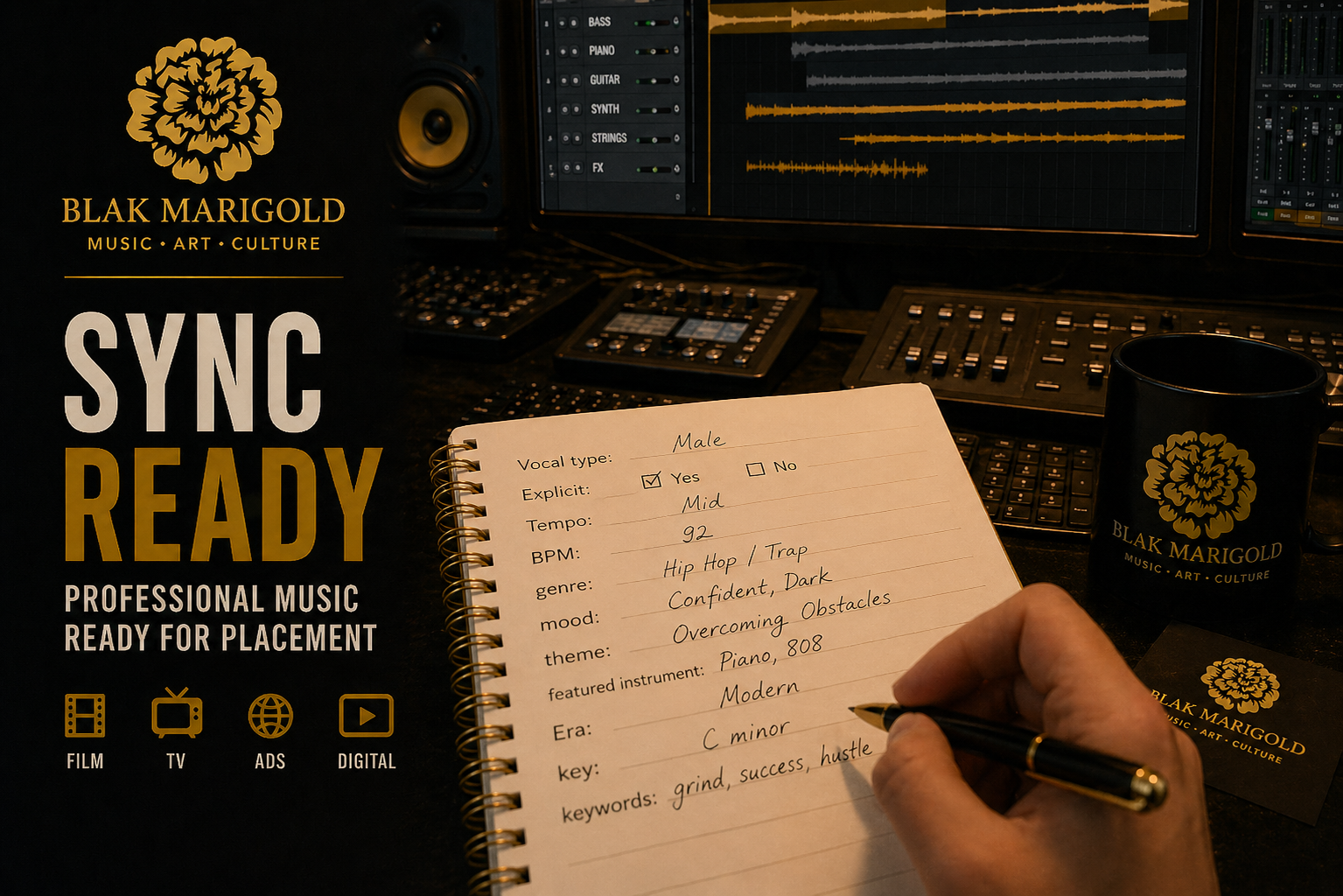
In plain English, metadata for sync licensing should tell a music supervisor what the track is, how it feels, and who can clear it. Songtradr’s required creative data includes:
Vocal type (Male or Female? Solo or Group Vocals?)
Explicit status (Are there swear words in the song?)
Tempo (How fast the track feels)
BPM (How fast the track is in beats per minute)
genre (and subgenre)
mood
theme (what do the lyrics and/or music evoke? what kind of story?)
featured instrument
era
key (The musical scale the song uses)
keywords
DISCO goes further by pushing standardized track tags across genre, instrument, lyrical theme, mood, tempo, type, and vocals. Marmoset’s browse tools also show that modern catalogs are searched by criteria like genre, mood, lyrics, length, and instruments.
So yes, your song title matters. Your comments field matters. Your tags matter. Your clearance email matters. “Fire beat final v3” is not metadata. It is evidence to music supervisors that you’re not willing to put the work in to make your song presentable.
Deliverables and Audio Versions
A track is not submission-ready just because the main mix exists.
Songtradr strongly recommends uploading instrumentals and additional files, as licensers often need alternate versions, and being unprepared can jeopardize a licensing opportunity. Its upload system specifically supports instrumentals, clean versions, and stems. DISCO defines stems as isolated audio elements used for sync editing in film, tv, and ads, and Songtradr notes that having stems can save crucial time when a buyer is on a tight deadline. Marmoset’s licensing workflow also supports downloads in hi-res formats and stems.
Your minimum package should usually include:
The Main Mix
The Instrumental
A clean version, if the lyrics are explicit
Stems (Either grouped into Bass, Drum, Vocal, Instrument busses, individually rendered, or both)
If the song has a cold intro buried under eight seconds of cinematic fog because that felt artistic, make a version with a quicker entry. If the hook only works when the full vocal is on top, prepare an instrumental section edit. Editors are not lazy, but they do have deadlines to meet, and any extra work you can do on your end will prove your resourcefulness.
Mix Quality and Catalog Presentation
There is no official government PDF titled “Your Snare Is Not Ready for Netflix,” but the industry still expects a certain level of quality to be met.
Songtradr asks for high-resolution audio files, such as WAV or AIFF, for additional versions, and Marmoset offers low-res listening files while supporting high-res WAV and AIFF downloads for licensed use. Musicbed says its in-house team accepts less than 1 percent of artist submissions, which tells you something important about the standard of curation in higher trust catalogs.
The inference is simple. Sync-ready music needs to sound finished, not “pretty good for independent.” That means controlled low end, clean vocal presentation, arrangement space for dialogue, and masters that feel competitive without turning into crushed bricks. This is where professional mixing and mastering matter more than artists want to admit. At Blak Marigold, the job is not just making a song sound expensive. It is making it usable in TV and film music, where technical readiness is part of the creative decision.
Clearance Strategy and Platforms
You also need a strategy for how the song will be offered.
DISCO defines an easy-clear track as one without complicated master and publishing clearance issues, and a one-stop track as one where a licensee needs to contact only one party to clear both sides. Songtradr’s explainer on sync licensing similarly notes that when one party controls both sides, that is often called a one-stop license. That is one reason one-stop clearance is so valuable. It reduces friction when a brief is live, and everyone suddenly wants the paperwork yesterday.
On the platform side, use tools for what they are actually good at. Songtradr is useful if you want a marketplace environment, ownership approvals, pricing controls, and access to licensing opportunities from film, TV, brands, ad agencies, and music supervisors. DISCOis more powerful for private catalog organization, playlist pitching, track tags, briefs, and client-facing presentation. Songview helps confirm ownership data. The MLC and SoundExchange are less glamorous but essential for matching and collecting the money that tends to disappear when people get “too creative” with admin. RapidCue matters because cue sheets remain the primary means by which PROs track film and television usage.
Recommended Platforms and What Nobody Tells You
If you are serious about sync licensing opportunities, use Songtradr for discoverability in a licensing marketplace, and DISCO for pitching professionally with searchable metadata, playlists, and briefs. Use Songview when you need transparency into ownership. Use The MLC for mechanical registrations and SoundExchange for sound recording claims and digital performance royalties. These may not be the most exciting part of the process, but for professionals, they are essential.
Now for the reality check. Music supervisors are not waiting to be impressed by your long email. ASCAP’s panel advice on sync submissions boiled down to a very unromantic truth: do your metadata and use DISCO links to pitch. That is not sexy. It is also exactly how professionals behave. The tracks that move are the ones that can be searched, auditioned, cleared, and edited fast.
Sync Licensing Bible directory with 300+ music supervisors, music libraries, publishers, and licensing contacts for artists and producers pitching music for film, TV, ads, games, and sync placements.
The Sync Licensing Bible gives artists, producers, songwriters, managers, and indie labels access to over 300 music supervisors, music libraries, publishers, licensing companies, and sync contacts so you can stop searching and start pitching with a real plan.
This directory is designed to save you time, help you stay organized, and give you a stronger starting point for getting your songs in front of people who work with TV, film, ads, trailers, games, and digital media.
Perfect for anyone ready to stop guessing where to send music and start building a real sync outreach system.
Digital download only. No physical product will be shipped.
Common Mistakes and How to Fix Them Fast
The common mistakes are predictable. No publishing split sheet. No IPI or ISRC on hand. No instrumental. No clean version. No clearance contact in the metadata. Uncleared Samples. The ownership details are incomplete, so the song is not even discoverable. Even after placement, some may forget to keep up with their cue sheets. This causes them to miss out on revenue from both the initial placement fee and back-end income.
Here is how to fix it fast. Pick your best three tracks. Confirm rights. Register the composition and recording data. Add searchable metadata. Export the additional files. Put the tracks into DISCO or Songtradr in a way a music supervisor can understand in seconds. Then compare your mix against the quality bar of real catalogs, not your friend’s playlist. If you need help bridging that gap, use a real sync licensing checklist and make the finishing step technical, not emotional. That is also where a studio like Blak Marigold helps. We encourage anyone looking to get into sync to contact us if they have any other concerns, especially if they live in the Austin, TX area.
If you are farther along, direct outreach can matter. Our curated 350-plus Music Supervisor Contact List is not just a shortcut for beginners, but an advanced tool for artists whose catalog, metadata, and clearance process are already solid. Used too early, it is just a faster way to get ignored. Used at the right moment, it can shorten the distance between your catalog and real decision makers.
FAQs
-
It is the process of licensing the composition and the recording for use in visual media like film, TV, ads, games, and online video, with separate permissions needed for each side.
-
You can self administer if you control your rights, register properly, and provide clear ownership and clearance contacts, but you still need professional metadata and deliverables.
-
Mostly through searchable catalogs, playlists, briefs, and trusted platforms that let them filter by mood, genre, lyrics, tags, length, and clearance status.
-
Rights ownership, clearance contact info, genre, mood, theme, vocals, BPM, key, instrumentation, and strong keywords are the essentials.
-
Yes, or at least you should assume you do. Buyers often request instrumentals, clean versions, and sometimes stems to meet edit needs fast.
-
It means one party can clear both master and publishing rights, which reduces delay and makes the track far easier to license.
-
A track is easy clear when there are no complicated clearance issues around the master and publishing sides.
-
They can, but you need master ownership details and ideally publishing controller information because the composition still needs sync permission.
-
Only if the samples are properly cleared and all owners are connected with correct percentages. Otherwise the song becomes a liability.
-
It is the written percentage breakdown of composition ownership among co writers and co owners, and it should add up cleanly.
-
If you are a self administered songwriter or publisher who wants digital audio mechanical royalties, yes. Accurate work and recording data improve matching and payment.
-
Not for the sync deal itself, but if you are a featured artist or sound recording owner, SoundExchange registration helps you collect digital performance royalties and manage recording data.
-
ISRC identifies the recording. ISWC identifies the musical work. You need both data paths organized if you want clean administration.
-
Extremely important. Platforms expect high resolution assets, curated libraries are selective, and tracks need to hold up in professional post environments.
-
Yes, especially if the goal is professional mixing and mastering, clean deliverables, and a recording workflow built for supervisors and editors, not just streaming release day.
-
Read the contract. Some platforms like Songtradr default to non exclusive licensing, while exclusive usage can be negotiated in certain cases.
-
Use metadata, playlists, and clean links. Do not send an essay when a searchable DISCO or catalog link will do.
-
DISCO for organization and pitching, Songtradr for marketplace discoverability, Songview for ownership checks, The MLC and SoundExchange for royalty side administration.
-
Usually because it was not discoverable, not clearable, not editable, or not mixed to professional level. Creativity is rarely the first failure point.
-
Use a sync licensing checklist and make sure one song is fully ready before you submit ten half ready songs. That is slower for your ego and faster for your career.