How to Build a Sync-Ready Music Catalog in 2026
Executive Summary
A sync-ready music catalog is more than just having good songs. Music supervisors, sync licensing companies, and libraries need music that is professionally organized, easy to clear, and immediately usable for TV, film, commercials, trailers, streaming platforms, and branded content.
In 2026, artists who land sync placements usually have structured catalogs with proper metadata, instrumental versions, clean edits, stems, mood organization, and consistent file naming.
This guide breaks down exactly how to build a sync-ready music catalog that is easier for music supervisors and licensing companies to search, review, and pitch.
If your catalog is difficult to navigate, lacks metadata, or lacks alternate versions, you may miss out on opportunities even if the music itself is strong.
Who This Is For
This guide is for independent artists, producers, and composers who are serious about music sync licensing and tired of vague advice. If you make Hip-Hop, R&B, Pop, Cinematic, Indie, Trailer music, Singer songwriter records, or Instrumental Production Music, this is for you.
It is especially for artists who already have good songs but suspect the real problem is everything around the song: unclear ownership, weak metadata for sync licensing, no stems or instrumentals, inconsistent mixes, and a folder they’ve so eloquently labeled “Final Final Really Final”.
Table of Contents
What Makes a Catalog Sync-Ready
Suggested Folder Structure
Why a Sync Ready Catalog Beats a Single Great Song
What a Sync Ready Music Catalog Actually Contains
Metadata Is Your First Audition
Versions Win Placements
Organize It Like Someone Else Has to Use It
Stop Guessing Who to Pitch Your Music To
Recommended Platforms and Tools
Recording Music That Actually Gets Placed
What Nobody Tells You About Sync Licensing
Common Mistakes That Get Music Ignored
How to Fix It Fast
A Serious Next Step for Serious Artists
FAQs
What Makes a Catalog Sync-Ready
A sync-ready catalog is built to help music supervisors quickly search for, clear, and place songs without delay.
Your catalog should include:
• Fully mixed and mastered WAV files
• Instrumental versions
• Clean edits
• Stems
• Alternate mixes
• One-stop ownership clarity
• Embedded metadata
• Consistent file naming
• Organized folders by mood and genre
• Fast streaming or download access
The easier your catalog is to browse and clear, the more likely supervisors and libraries are to revisit your music for future opportunities.
Suggested Folder Structure
Music supervisors and sync libraries prefer clean organization.
Example structure:
• Catalog
• Indie Pop
• Instrumentals
• Clean Versions
• Stems
• Cinematic
• Tension
• Emotional
• Hip Hop
• Trailer Music
• Metadata Sheets
• Split Sheets
• Artwork
Keep names consistent and easy to scan quickly.
Why a Sync Ready Catalog Beats a Single Great Song
A lot of artists obsess over one song when they should be building a system. A music supervisor usually needs options, not a lone masterpiece with a rights headache attached. Berklee’s sync guidance and Universal Production Music’s recent supervisor-focused guidance both point to the same reality: creative teams need tracks that match emotion, tempo, and timing quickly, often from pre-cleared catalogs that remove legal delays.
Taken together, the implication is simple. A sync-ready catalog is not just a collection of songs. It is a set of searchable, licensable assets that can answer different briefs. If a supervisor needs moody alt R&B today, tension cues tomorrow, and an instrumental next week, the catalog that wins is the one that already has those choices built in.
What a Sync Ready Music Catalog Actually Contains
At a minimum, your catalog needs clean ownership. TuneCore’s sync licensing guide breaks down the two sides of every sync deal: the composition and the master. It also explains why split percentages matter and why uncleared samples can kill sync licensing opportunities before they start. BMI’s royalty guidance reinforces the publishing side by explaining that royalties are divided between songwriter and publisher shares, which means your paperwork cannot be a creative writing exercise.
A truly usable catalog also needs one-stop clearance wherever possible. TuneCore defines one-stop clearance as when one entity owns 100 percent of the master and 100 percent of the publishing rights, making licensing dramatically simpler. Songtradr makes the same point from the marketplace side, noting that if one party owns and controls both sides, licensing is easier and faster. This is why exclusive control or clearly documented administration often beats messy flexibility. It is not romantic, but it is effective.
Metadata Is Your First Audition
If your music’s metadata is bad, it means your song is invisible to supervisors. That is not an opinion; it is an essential part of the industry infrastructure. Songtradr requires ownership details, creative metadata, audio files, pricing, and approvals before a song becomes discoverable in its licensing marketplace. APM’s metadata submission guidelines go even further, requiring detailed track descriptions and BPM for all tracks, with stems’ metadata delivered in a structured format.
Synchtank’s catalog management guidance is blunt about why this matters. Strong tagging by mood, instrumentation, key, tempo, lyrics, and keywords makes a catalog easier to search, easier to license, and less likely to create disputes later. Its metadata search guidance even describes supervisor-style searches in plain English, e.g., looking for a hopeful 1980s synthpop track with female vocals at 120 BPM. That is how real discovery happens inside a music library or production music library. Not capturing a vibe, but using clear, precise data.
Every song’s metadata should include:
• Song title
• Artist name
• Writer splits
• Publisher information
• PRO affiliation
• ISRC code
• BPM
• Key
• Mood tags
• Genre tags
• Similar artists
• Contact information
• Explicit or clean version labeling
Strong metadata increases the likelihood that your songs will appear in library searches and music supervisor pulls.
Track Versions You Should Have Ready
A sync-ready catalog is more than finished songs. You want fast clearance and easy use, so you need clean versions, consistent file naming, and metadata that answers who owns what. If you can deliver this in one link, you get picked more often. Important track versions to have include:
Instrumentals
Instrumentals with only the Hook vocals
Acapellas
30, 60, and 90-second Cutdown versions with sting endings (Especially important for advertisement placements)
Versions Win Placements
A catalog that only has full mixes is not sync-ready. Berklee Online courses teach students to render stems and alternate mixes to improve placement potential, and Songtradr’s upload workflow expects artists to attach instrumentals, clean versions, and stems to a main mix. APM’s guidelines also treat stems as distinct delivery assets tied to metadata, not just a little treat for whoever happens to pick your song.
This may seem like overkill on the administrators’ part, but it’s really not. Editors need flexibility. Dialogue may clash with lead vocals. A trailer cut may only need drums. A scene may need the emotional tone of your chorus without the lyric about an ex ruining your credit score. Even buyer-side services like Soundstripe highlight stems, alts, and cut-downs as creative control tools, and Musicbed explains stems as the individual audio groupings that let teams reshape a track for picture.
Organize It Like Someone Else Has to Use It
Your catalog should live in a system, not just in your memory. Synchtank advises making your playlists easy to access without logins, easy to stream, and easy to download. Do take note, though, that they specifically call attaching files directly to emails a bad move. SourceAudio’s clients say the platform helps expedite music searches, while its broader product data shows just how search-heavy this space has become, with hundreds of thousands of searches happening weekly.
That means file naming, artwork, version labeling, ownership fields, and shareable pitch links all matter. Even audio quality and format matter. Soundstripe’s knowledge base says its professional downloads include 48 kHz, 24-bit WAV files for film, broadcast, and mastering use. If your exported files are inconsistent, poorly named, or don’t meet their sync-quality standards, you are adding friction before the first creative conversation even starts.
Stop Guessing Who to Pitch Your Music To
Get instant access to 300+ music supervisors, sync libraries, publishers, and licensing contacts. We did the research so you can build your pitch list, submit smarter, and get your music in front of the people placing songs in film, TV, ads, games, and music libraries.
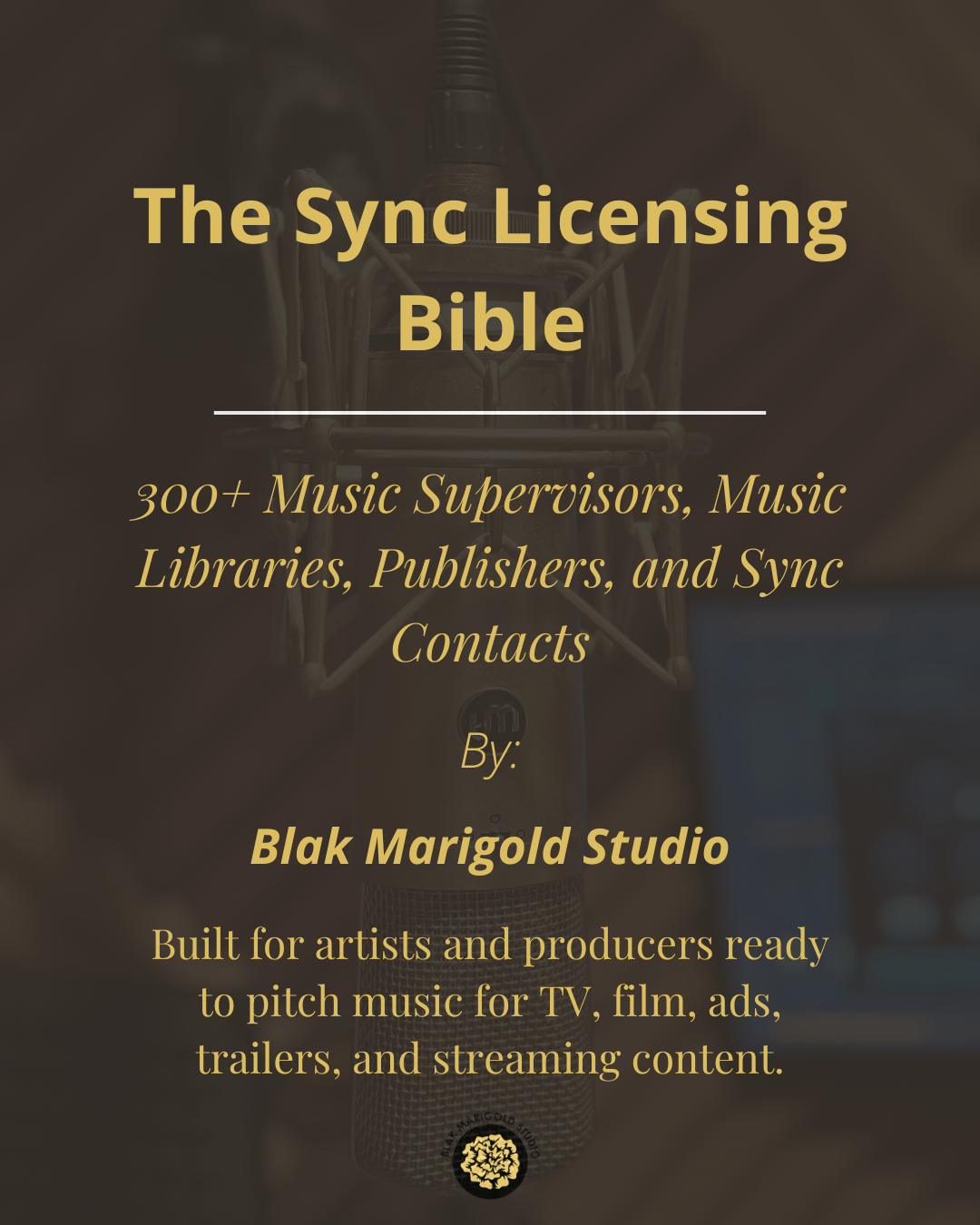
Sync Licensing Bible directory with 300+ music supervisors, music libraries, publishers, and licensing contacts for artists and producers pitching music for film, TV, ads, games, and sync placements.
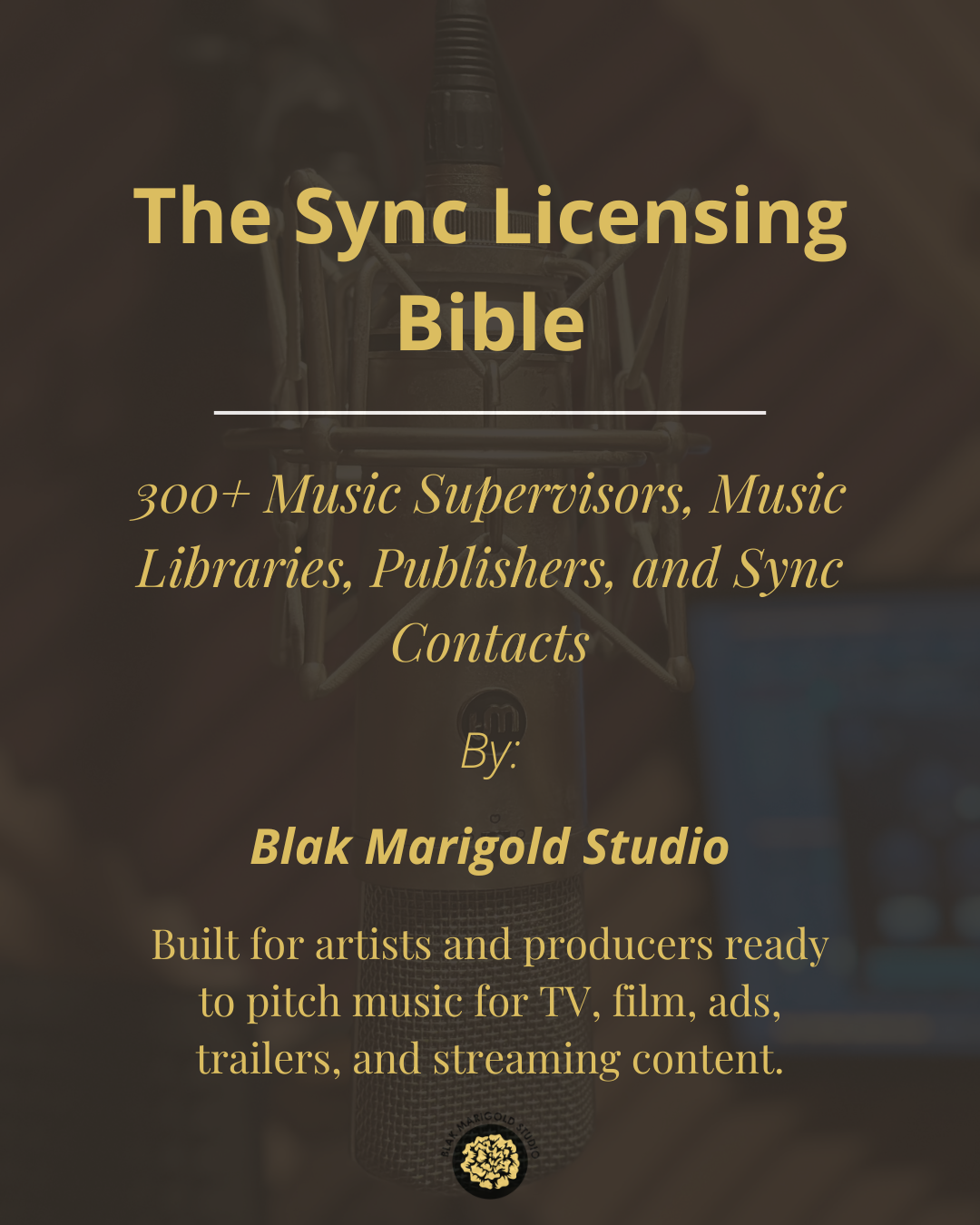
The Sync Licensing Bible gives artists, producers, songwriters, managers, and indie labels access to over 300 music supervisors, music libraries, publishers, licensing companies, and sync contacts so you can stop searching and start pitching with a real plan.
This directory is designed to save you time, help you stay organized, and give you a stronger starting point for getting your songs in front of people who work with TV, film, ads, trailers, games, and digital media.
Perfect for anyone ready to stop guessing where to send music and start building a real sync outreach system.
Digital download only. No physical product will be shipped.
Recommended Platforms and Tools
If you are early in the process and need structured marketplace exposure, Songtradr is useful because it forces you to think like a catalog owner, not just an artist. You have to enter master ownership, copyright data, lyrics, creative metadata, pricing, and approvals before the music is discoverable. That is annoying in the same way a passport application is annoying. It is still necessary.
If you pitch directly or manage even a modest catalog, a serious catalog tool matters. SourceAudio positions itself as a catalog management and music licensing infrastructure, and Synchtank frames itself as a central hub for assets, cue sheets, playlists, and contracts. If your strategy involves multiple collaborators, multiple versions, and multiple pitch targets, that central source of truth becomes less of a luxury and more of a survival mechanism.
For ownership verification, Songview remains useful because ASCAP and BMI designed it as a combined view of repertoire and public performance ownership data. For a curated library strategy, understand the difference between accessible marketplaces and tight rosters. Musicbed says its in-house team accepts less than 1 percent of artist submissions, which tells you exactly what kind of bar curated platforms can have.
Recording Music That Actually Gets Placed
A sync-ready catalog is not only about metadata and rights. It also has to sound like it belongs in the room. Universal Production Music emphasizes professionally recorded, high-quality tracks in pre-cleared catalogs, and Soundstripe markets studio-quality tracks alongside fast licensing and stems. That should tell you something. The catalog does not have to be expensive, but it does have to sound finished.
That is where mixed decisions matter. A vocal sitting too forward, a muddy low end, an overly bright top, or a master crushed into dust can ruin placement potential even if the writing is strong. If you are comparing Austin recording studios or looking for a recording studio that Austin artists can trust for sync-focused work, the right room is the one that understands delivery, editing flexibility, and broadcast-ready quality. Blak Marigold fits naturally into that conversation because this is exactly where professional mixing and mastering stop being cosmetic and start being strategic.
What Nobody Tells You About Sync Licensing
What nobody tells you is that music supervisors are not out there hunting for your hidden genius. They are solving production problems. Universal Production Music describes a world of tight deadlines, budget pressure, and the need to find the right track quickly. Synchtank says the competitive advantage in sync is speed, and DISCO has quoted music supervisor Ryan Svendsen, who said metadata is everything after receiving more than 1,000 tracks in 10 hours.
So yes, your art matters. But in this business, usable beats brilliant every day of the week. The track that gets placed is often not the most emotionally complicated thing in the folder. It is the one that fits the brief, arrives with clean rights, streams instantly, downloads easily, and includes the versions post-production actually needs.
Common Mistakes That Get Music Ignored
The first mistake is pitching songs before the rights are settled. The second is skipping metadata or using lazy metadata. The third is not supplying instrumentals, clean versions, or stems. The fourth is a fragmented administration that makes exclusive vs. non-exclusive music library strategy look clever on paper and chaotic in practice. TuneCore’s sync guide is especially clear that non-exclusive administration can create pricing confusion and market-exclusivity issues.
The other big mistake is quality control. A catalog can be perfectly organized and still fail if the recordings don’t feel finished. This is where many artists confuse streaming-ready with sync-ready. A good Spotify mix can still be a bad sync mix if it leaves no room for dialogue, has no alt versions, or feels sonically inconsistent across the catalog.
How to Fix It Fast
Start with ten songs, not a hundred. Make sure every song has a signed publishing split sheet, clean ownership data, a clear main mix, an instrumental, a clean version if needed, stems, accurate metadata, and a shareable streaming link. Then register the works properly with your PRO and track cue sheets when placements happen, because cue sheets remain central to performance royalty tracking in film and television.
Then do the unglamorous part. Rename files. Standardize artwork. Audit lyrics. clear any sample issues. Compare mixes across the catalog. If one song sounds like a polished master and the next sounds like it was quickly bounced from a laptop on a 4 percent battery, fix that before you start wondering how to contact music supervisors. They are not refusing your brilliance; they are avoiding a potential licensing headache.
A Serious Next Step for Serious Artists
If you are building this correctly, a Sync Licensing Checklist helps because it turns a vague process into a repeatable one. That is also where Blak Marigold can fit in naturally. The studio conversation is not about vanity. It is about getting the masters, edits, and deliverables to the point where the catalog feels consistent, confident, and actually pitchable.
And once the catalog is truly ready, a 350-plus Music Supervisor Contact List becomes useful. Not because cold emailing suddenly becomes a magical process, but because a serious artist with a serious catalog can move faster when the research is already done. A tool like this is not a substitute for quality, but an accelerator for artists who have already handled the quality part.
FAQs
-
Sync licensing is the permission to pair music with visual media, and it usually involves clearing both the composition and the master recording. That is why one great track can still be unusable if the rights are split or unclear.
-
A sync ready catalog has clear ownership, searchable metadata, professional mixes, shareable links, and the right versions such as instrumentals, clean edits, and stems. If any of those are missing, the catalog is less discoverable and harder to license.
-
Cinematic, indie pop, emotional piano, trailer music, Hip-Hop, tension cues, ambient, and uplifting corporate tracks remain strong genres in 2026.
-
They usually search structured catalogs by mood, genre, instrumentation, tempo, lyrics, and rights status, often under intense deadlines. Metadata and pre cleared rights matter because they reduce the time between brief and placement.
-
Yes. If co writer percentages are not agreed and documented, you are building future licensing problems into the song. Split percentages determine how sync fees and royalties are divided.
-
One stop clearance means one entity controls 100 percent of the master and 100 percent of the publishing, so a licensee can clear the whole song in one place. That is faster and often more attractive to buyers.
-
Yes. Berklee, Songtradr, APM, and buyer side platforms all point to stems and alternate mixes as important practical assets. Editors need flexibility, and tracks without versions are harder to use.
-
Both. Most sync catalogs benefit from mood based and genre based organization because supervisors often search using emotional tone first.
-
It is essential. Metadata is how your song becomes searchable by brief, mood, BPM, instrumentation, and rights status. Bad metadata does not lower your chances a little. It can remove you from the search entirely.
-
It depends on your goals, but exclusivity often simplifies pricing and market exclusivity. TuneCore’s guide explains how non exclusive administration can create conflicts when multiple parties can quote the same song.
-
No. TuneCore is direct that uncleared samples create major problems for sync because both master and publishing rights have to be cleared.
-
At minimum, keep professional WAV files ready. Soundstripe specifies 48 kHz, 24 bit WAVs for professional editing, film, and broadcast, which reflects the quality level serious production workflows expect.
-
-
A cue sheet logs the music used in a production and is a primary means for PROs to track TV and film usage. BMI says accurate cue sheets are crucial for receiving correct compensation.
-
The simpler and cleaner the catalog structure is, the easier it becomes for supervisors and libraries to search and reuse songs.
-
There is no magic number, but a smaller catalog of thoroughly prepared songs usually beats a large sloppy one. Ten fully cleared, properly tagged, professionally mixed tracks are more useful than fifty half finished maybes. This is an inference drawn from how libraries and catalog tools prioritize discoverability and rights clarity.
-
Both, depending on the brief. But even when vocals are welcome, instrumentals often increase usability because dialogue and edit needs change late in the process. That is why major platforms support additional versions and stems.
-
Build a tight catalog, register the works, keep rights simple, use a music library or music licensing company strategically, and pitch only when the music is actually ready. Sync licensing for independent artists is less about access and more about preparedness.
-
They can be, especially if they simplify clearance and get your catalog in front of the right buyers. But a weak catalog does not become strong because a logo touched it. The preparation still has to happen first.
-
Songtradr can structure marketplace metadata and rights. SourceAudio and Synchtank can centralize large catalogs, sharing, searchability, and data. Songview helps verify ownership information across ASCAP and BMI data.
-
Indirectly, yes. A good recording studio improves the one part creators often underestimate: mix consistency, deliverable quality, and file readiness. For artists evaluating the best recording studios in Austin or a recording studio for sync work, that preparation matters more than décor. Industry libraries consistently emphasize professionally recorded, high quality tracks. This is something we specialize in at Blak Marigold.
-
Do not mass email attachments. Synchtank explicitly advises easy access, no login barriers, and no attached files. Your pitch should be brief, relevant, and built around a usable playlist, not a life story.
-
Run a checklist: ownership, PRO details, metadata, alternate versions, WAV exports, naming conventions, and a working pitch link. Then ask one rude but useful question: if a supervisor opened this in five minutes, would anything slow them down? If yes, fix that first.