

What Files Do Music Supervisors Actually Need? The Full Sync Delivery Guide for Independent Artists
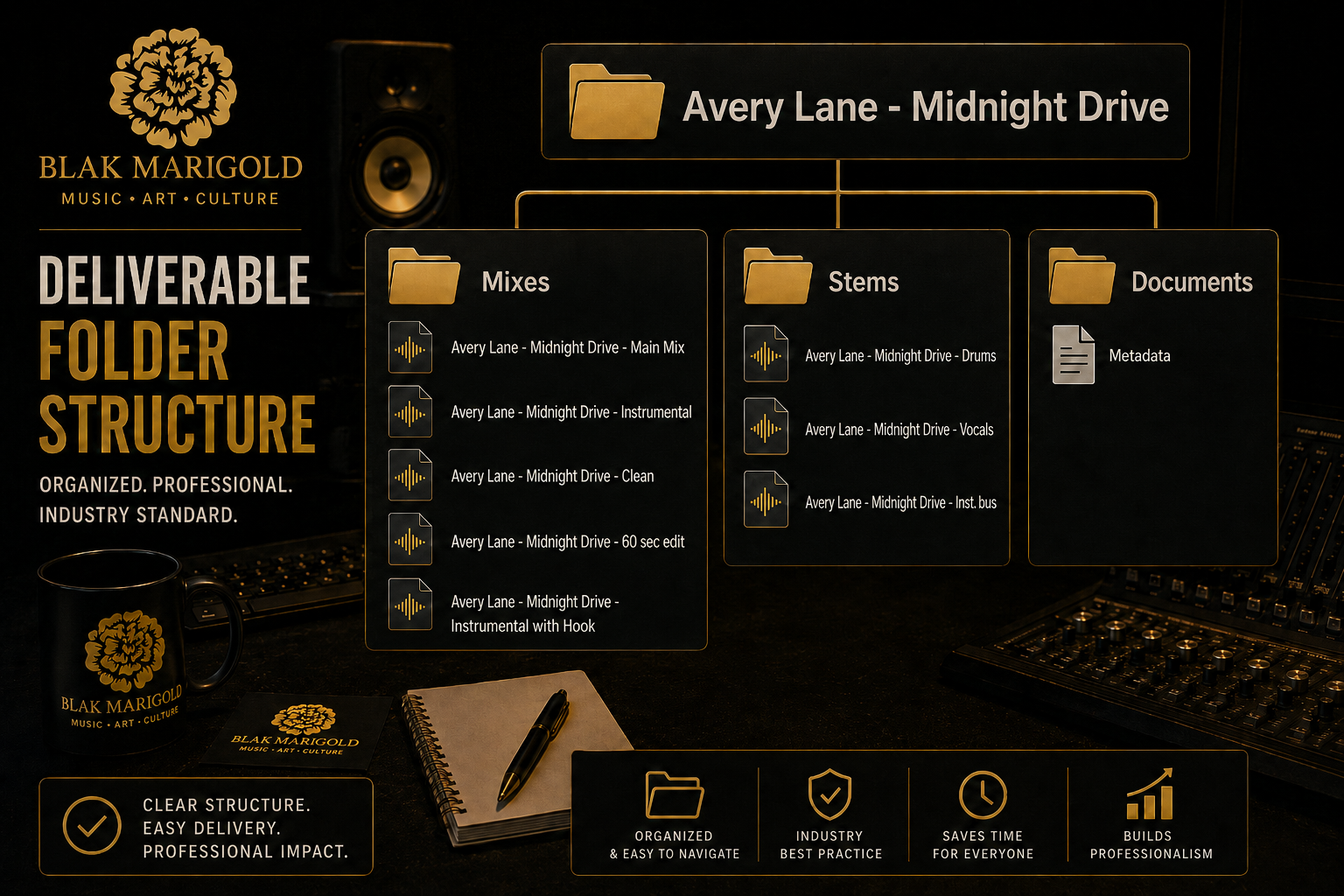
Table of Contents
• Why this matters before you pitch
• The short answer: what most supervisors need
• The core files every serious artist should have ready
• When supervisors ask for stems and when they do not
• The metadata that keeps your music from getting ignored
• How to package your folder so a supervisor can use it fast
• The mistakes that make good songs feel unprofessional
• When to hire a mixing or mastering engineer before pitching
• Final checklist before you send anything
• FAQs
Why this matters before you pitch
A lot of independent artists think sync success starts when they finally find the right music supervisor, library, or brief. While that may be somewhat true, there’s more to it than that. In real life, a surprising number of songs are passed over before they ever get fully considered because the artist cannot deliver the files that make the track easy to use.
Here is the part many artists miss: A supervisor may love the hook, the vibe, the drums, or the emotional tone, but if they ask for an instrumental, a clean version, a shorter edit, stems, or clear metadata, and you don’t have those files ready, your song becomes harder to place than the next one. The problem is not one of song quality, but of file organization.
This matters even more now because music supervisors, sync agents, libraries, trailer houses, and creative teams move quickly. They are not only listening for great songs. They are evaluating whether a song is easy to search, easy to clear, and easy to deliver on deadline. Your files are part of your professionalism. If your song is strong but your delivery is messy, late, incomplete, or confusing, you create friction. Friction kills opportunities.
The reason we talk about this in so many blogs is that the same pattern keeps coming up: songs that are better prepared for sync placements are consistently picked more often. On our sync page and in our recent sync blogs, the message is consistent. Broadcast-ready mixes, metadata, instrumental versions, clean edits, stems when requested, and clear ownership are not optional. They are part of a track being pitch-ready.
Here, we aim to provide the practical delivery guide artists need to stop guessing and start building a catalog that a music supervisor can actually work with. If your goal is to get placed, get callbacks, and look more professional than the average indie artist, your file delivery process matters almost as much as the song itself.
The short answer: what most supervisors need
In short, most music supervisors want the main mix, the instrumental, a clean version if there is explicit language, and accurate metadata. Depending on the project, they may also ask for stems, 30-second and 60-second edits, short-intro versions, an acapella, or alternate mixes. The exact request may vary by project, but the pattern stays the same. They want music that is easy to search, easy to clear, and easy to slot into a scene without extra back-and-forth.
This isn’t just industry talk. It shows up repeatedly in sync-focused educational material. Symphonic’s 2026 guidance tells artists to have alternate versions ready, specifically naming clean edits, a cappellas, stems, 30-second edits, 60-second edits, and versions without long intros or outros. Track Club also emphasizes delivering high-quality files and organizing versions clearly so supervisors can browse quickly. DISCO’s own training material focuses heavily on metadata and version management because discoverability and clean delivery directly affect whether a track can move forward.
What this means for artists is simple. You don’t need every song in your catalog to have twenty variations before you ever pitch them. But your best songs, especially the ones you want to push hard for sync, should be prepared like assets, not just songs. There should be a main version, usable alternates, clean file names, consistent metadata, and a folder structure that does not make another person do detective work.
The artists who win in sync are not always the artists with the biggest budgets. A lot of the time, they are just the people who make the supervisor’s job easier. When a creative team is rushing to cut a trailer, finish a television episode, replace a temp track, or tighten an ad edit, they do not want to chase down missing versions. They want to drag in a file, test it fast, and know they can clear it if the scene works. If your catalog makes that easy, you become more usable. The more usable you become, the more licensable you become.
The core files every serious artist should have ready
At a minimum, every serious sync-ready song should have a full vocal mix and a true instrumental. This is the baseline. The full mix is obvious, but the instrumental is where many artists fall short. Supervisors regularly need room for dialogue, voice-over, or sound design. Even if they like your topline, they may need to test the production without vocals under a scene. If you cannot provide that quickly, your song may lose out to another record that has.
The next file you should have is a clean version of the song; if the song contains profanity, heavy sexual language, etc., it may be problematic for network television, family-friendly content, branded campaigns, or broader streaming placements. An ideal clean version shouldn’t be a lazy mute job. It should feel intentional, musical, and professional. Sloppy clean edits will be seen as amateurish. A properly mixed clean version can keep a strong record in play for more opportunities.
After that, your strongest songs should also have short edits and practical alternates. The most useful versions are often a 30-second edit, a 60-second edit, a version with a faster start, and, depending on the style, an a cappella or no-lead-vocal version. Ad work, promos, social campaigns, and some trailer-style uses often need quick impact and flexible timing. If your song takes twenty-two seconds to bloom, that may be artistically fine for Streaming, but annoying for sync. A version that gets to the point faster can make the same composition more usable.
Stems sit in a different category. They are not always needed at the first pitch stage, but they matter when the project needs fine control. Stems allow editors, music teams, and mixers to rebalance sections, duck vocals, highlight drums, or fit the arrangement more precisely to a cut. If a project is serious enough, or if the supervisor knows the production team may need flexibility, stems may be included in the request.
A cappellas and alternate lead-vocal versions can also help in certain scenarios. A creative team may love the hook but want to test only a specific vocal phrase. Maybe they want to edit around a lyric. They may need to rebuild a cue for pacing. These are not the first versions every artist needs to make, but they are the kinds of assets that will give a catalog a truly professional feel.
The real point is this: treat your song like a deliverable package. The main mix is the centerpiece, but the package around it is what turns a song into a usable licensing asset.
When supervisors ask for stems and when they do not
One of the biggest points of confusion in artist circles is that many people either think stems are always required or that stems never matter until a deal is signed. The truth lies somewhere in the middle.
Many supervisors do not need stems for the very first listen. If they are screening playlists, reviewing submissions, or pulling options for a brief, they may only need the main mix and instrumentals at the discovery stage. In those moments, speed matters more than file complexity. They want to know whether the song fits.
Where stems become important is when a song starts moving closer to real use. Maybe the editor wants more room for dialogue. The brand team may like the beat but needs the vocal line lower. A trailer editor may want to build around the drums and impact moments. A television scene may need the vocals in one section but not another. That is when stems become important.
This is also where artists get tripped up by terminology. A stem is not the same thing as every raw individual track in your session. Stems are grouped audio exports, such as drums, bass, music, lead vocals, backing vocals, and effects. They are organized for practical control. If you send 37 random audio files with vague names, that is not helpful for stem delivery. All you’re creating is more work for the supervisors and editors.
The smarter move is to prepare clean, labeled stems for your strongest sync songs. You do not need to render stems for every demo in your vault. But if there are ten to twenty songs you believe are your sync priorities, it is worth preparing them properly. It’s best to do this as soon as you feel the song is “Finished.”
The deeper reason this matters is trust. When an artist can immediately provide well-organized stems, it tells the supervisor and anyone downstream that the record can survive real-world production needs. That reliability increases confidence. Songs do not only get licensed because they sound good. They get licensed because they fit creatively and can be delivered cleanly under pressure.
The metadata that keeps your music from getting ignored
A great file package still fails if the metadata is weak. Metadata is one of the least glamorous parts of sync prep, but it is one of the most important. It affects how your tracks are found, how quickly someone can understand ownership, and whether a person can contact you when they are interested.
At the absolute minimum, your sync-ready files and your catalog database should include the song title, artist name, writer information, publisher information, contact email, genre, subgenre, mood descriptors, tempo, version labels, and ownership splits. If the track is instrumental, clean, explicit, or alternate, that needs to be clear. If there are one-stop or easy-clear rights, that should also be obvious.
DISCO’s educational material is strong on this point for a reason. Good metadata is not clerical busywork. It affects how easily music is found and shared, what information travels with the file, and how professional your catalog appears when someone downloads it. Symphonic and other sync educators make the same point: if a track cannot be identified and cleared fast, it creates friction.
This is where many independent artists sabotage themselves. They may spend weeks making the record, but rush the file naming. Then months later, someone opens a folder full of vague exports like final2, audio track(2), 1554234(4), johnmanor_23315_crowd noise.mp3, etc. This isn’t just an organizational issue; it signals a lack of care.
Your file names should read like a system. Think:
ArtistName - SongTitle - Main Mix.wav
ArtistName - SongTitle - Instrumental.wav
ArtistName - SongTitle - Clean.wav
ArtistName - SongTitle - 60 Sec Edit.wav
ArtistName - SongTitle - Instrumental with Hook.wav
When a supervisor or assistant sees that, they instantly understand what they are looking at.
Metadata is also where your mix-and-master process can help you. If your mastering workflow consistently embeds final track information, you can reduce mistakes and make the catalog easier to manage. This is one more reason artists who are serious about sync should not think of mixing and mastering as just making a song louder or cleaner.
How to package your folder so a supervisor can use it fast
The ideal sync folder should be clean and easy to navigate. Nobody should have to open five files to figure out which version is the real master.
A simple structure works best. Use a top-level folder with the song title and artist. Inside, keep your main versions together: main mix, instrumental, clean, explicit, 30-second edit, 60-second edit, and any no-intro or alt versions. Put stems in a clearly labeled subfolder. Put lyric sheets, split sheets, and metadata docs in another clearly labeled folder if you are sending them. Do not bury the key audio files three levels deep.
Keep every file high-quality and consistent. 24-bit WAV is the safest standard for most professional sync use. If another platform offers lossless alternatives or MP3 for quick previews, that may be fine for specific workflows, but your best delivery package should be based on full-resolution audio.
This is also where your intro and outro decisions matter. Songs made for streaming do not always open in a sync-friendly way. A beautiful sixteen-bar mood build can work artistically, but it can be annoying for supervisors who need a faster impact. That does not mean every song should start with a giant crash and a hook. It means you should think in versions. The sync version should get into the meat within the first few seconds of starting.
Another smart move is to include a short read-me or metadata sheet when appropriate. Not a long essay. Just clean, helpful information: song title, writers, publishers, PRO affiliation, contact email, explicit/clean status, BPM, and one-sentence mood or usage notes. This can be especially helpful when pitching directly or sending a focused playlist to a supervisor, manager, or library.
A good sync folder communicates respect for the other person’s time. That sounds small, but it is a competitive advantage. Most artists still send messy files. If your folder is easy to work with, it reflects on you and your music.
The mistakes that make good songs feel unprofessional.
The first major mistake is only finishing the main version and assuming you’re fine to do the rest later. That may sound efficient until the request comes in on a deadline, and now the producer is unavailable, the vocal session is missing, or the clean edit sounds terrible because it was rushed. The best time to make your alternates is while the song is still fresh and the session is organized.
The second mistake is confusing stems with raw multitracks, and sending disorganized exports. If a supervisor or sync rep asks for stems, they are usually requesting grouped, mixed versions that help the post-production team work quickly. Random track dumps will make you look less professional, not more.
The third mistake is weak file naming. “song_Final_new_for_sync_(3)” is not acceptable. Neither is “SongTitle bounce 24bit”. Every file should be instantly clear. If a stranger downloads it, they should know what it is without asking you a single question.
The fourth mistake is ignoring metadata or having unclear usage rights. A supervisor may love a song and still avoid it if ownership is unclear, contact information is missing, or the splits are messy. Songs that are hard to clear often lose to songs that are easier to license.
The fifth mistake is pitching songs that are not fully mixed or mastered. There is a difference between a raw record with charm and an unfinished mix that does not translate. If the vocal is harsh, the low end is muddy, or the master sounds worse than professional references, the track may not survive side-by-side playlist listening. This is where artists underestimate how much finishing matters. In sync, your song does not only need to be emotionally right. It needs to hold up sonically when dropped into a competitive listening environment.
The last mistake is not thinking in use cases. Supervisors are solving creative problems. They are not rewarding you for having one perfect hero export. They need options they can test quickly. the artists who understand that best are consistently better prepared for the world of sync.
When to hire a mixing or mastering engineer before pitching
There are two moments where professional finishing becomes a real advantage. The first is when your song is creatively strong, but sonically inconsistent. The writing is there, the performance is there, and the production has sync potential, but the vocal balance, low end, transients, stereo image, or overall translation are not competitive enough. In that case, better mixing and mastering aren’t just an extra step; they’re essential to the overall experience. They increase the odds that the record will survive a first-listen comparison.
The second moment is when you know the song is one of your priority sync assets and you need alternate versions built properly. This is where working with a real studio can save time and prevent avoidable mistakes. A professional mix-and-master workflow can help you finalize the main version, create a clean version that still feels musical, prepare an instrumental that translates, organize stems correctly, and deliver versions that look and sound like they were produced by people who understand real-world licensing workflows.
This is where Blak Marigold has a natural service advantage. With us, are not only offering mixing and mastering in a vacuum. You speak to artists who care about sync, delivery, catalog prep, and music business outcomes. We’re not just here to make songs sound good; we’re ready to help make people’s music into professional-grade assets.
If you have 10 songs and only 3 are real sync contenders right now, start there. Get those records fully finished. Build the alternate versions while the sessions are live. Prepare the metadata. Create a reusable folder system. Over time, your catalog starts to look more like a professional portfolio than a random collection of songs.
If you want your music to sound competitive and be ready for real sync delivery, visit the Blak Marigold Mixing & Mastering page and the Sync page. We help build records that are not only creative; they are the industry standard.
Final checklist before you send anything
Before you pitch a song, ask yourself a more honest question than “Is this a good song?” Ask: Can someone use this immediately if they love it?
Your final checklist should look like this.
Is the main mix finished and competitive?
Is there a true instrumental?
Is there a proper clean version if needed?
Do you have short edits or fast-start versions for your strongest records?
Are stems prepared for priority songs?
Are the file names clean and consistent?
Is the metadata accurate?
Are the rights and splits clear?
Can the right person be contacted instantly?
If a supervisor replies today, could you send a professional folder in minutes instead of days?
That is the standard; Preparedness for the sake of opportunity.
The artists who get frustrated with sync often think the industry is impossible to break into. Sometimes it is tough. But sometimes the issue is simpler. The song got attention, and the file package did not hold up. Fixing that is one of the most practical upgrades an artist can make.
If you want more placements, more replies, and more confidence when you send your music out, stop treating delivery as an afterthought. Your file package is part of the pitch.
Need help turning a strong song into a release-ready and sync-ready asset?
FAQs
-
No. Many first-listen situations only require the main mix and instrumental. Stems become more important when a project moves closer to real use and the team needs flexibility for dialogue, edits, or post-production tweaks.
-
At minimum, have the main mix, instrumental, and a clean version if the song has explicit language. Your best sync songs should also have strong metadata and clear ownership information.
-
WAV is the safest professional standard for final delivery because it preserves full quality. Some platforms may accept MP3 for preview, but your core package should be built around high-quality lossless files.
-
Stems are grouped exports like drums, bass, music, lead vocals, and backing vocals. Multitracks are the raw individual session tracks. If someone asks for stems, do not send a messy track dump unless they specifically requested multitracks.
-
If there are any lines that could limit use in television, branded campaigns, family content, or wider streaming opportunities, it is smart to prepare a clean version. A strong clean version keeps more doors open.
-
Not necessarily. Prioritize your strongest and most sync-friendly records first. Build deeper alternate versions for the songs you are actively pitching or believe have the highest placement potential.
-
Song title, artist, writers, publishers, contact email, ownership splits, genre, mood, version labels, explicit or clean status, and any one-stop or easy-clear information are all useful.
-
You can, but it is risky. Deadlines move fast, and rushing alternates often leads to sloppy edits or missing files. It is much smarter to prepare your best songs in advance.
-
Use a clean, predictable format like:
ArtistName - SongTitle - Main Mix.wav
ArtistName - SongTitle- Instrumental.wav
ArtistName - SongTitle - 60 Sec Edit.wav.
Make every version obvious at a glance.
-
Yes. Some placements need faster impact. That is why it helps to prepare alternate versions without long intros or with quicker starts, especially for ads, promos, and short-form edits.
-
Choose your top five to ten sync-ready songs, finish the mixes and masters, create the most important alternate versions, clean up the metadata, and build a repeatable folder system from there.
